
The Texas Roof Insurance Claim Process, Step by Step

Updated: Jul 30
If you've never filed a roof claim, the process feels like a black box: adjusters, scopes, ACV, RCV, supplements, deductibles. Here's the whole thing in plain English, from a company that walks Denton County homeowners through it every week.
Step 1: Get inspected BEFORE you file
Filing a claim creates a record — even if it's denied or below deductible. A professional inspection first tells you whether you have claimable damage and roughly what it's worth. Sometimes the right answer is "don't file," and an honest contractor will say so.
Step 2: File the claim
Call your carrier or use their app. You'll get a claim number and an adjuster assignment. Timeline matters: most Texas policies require claims within one year of the storm date, and some are shorter.
Step 3: The adjuster meeting
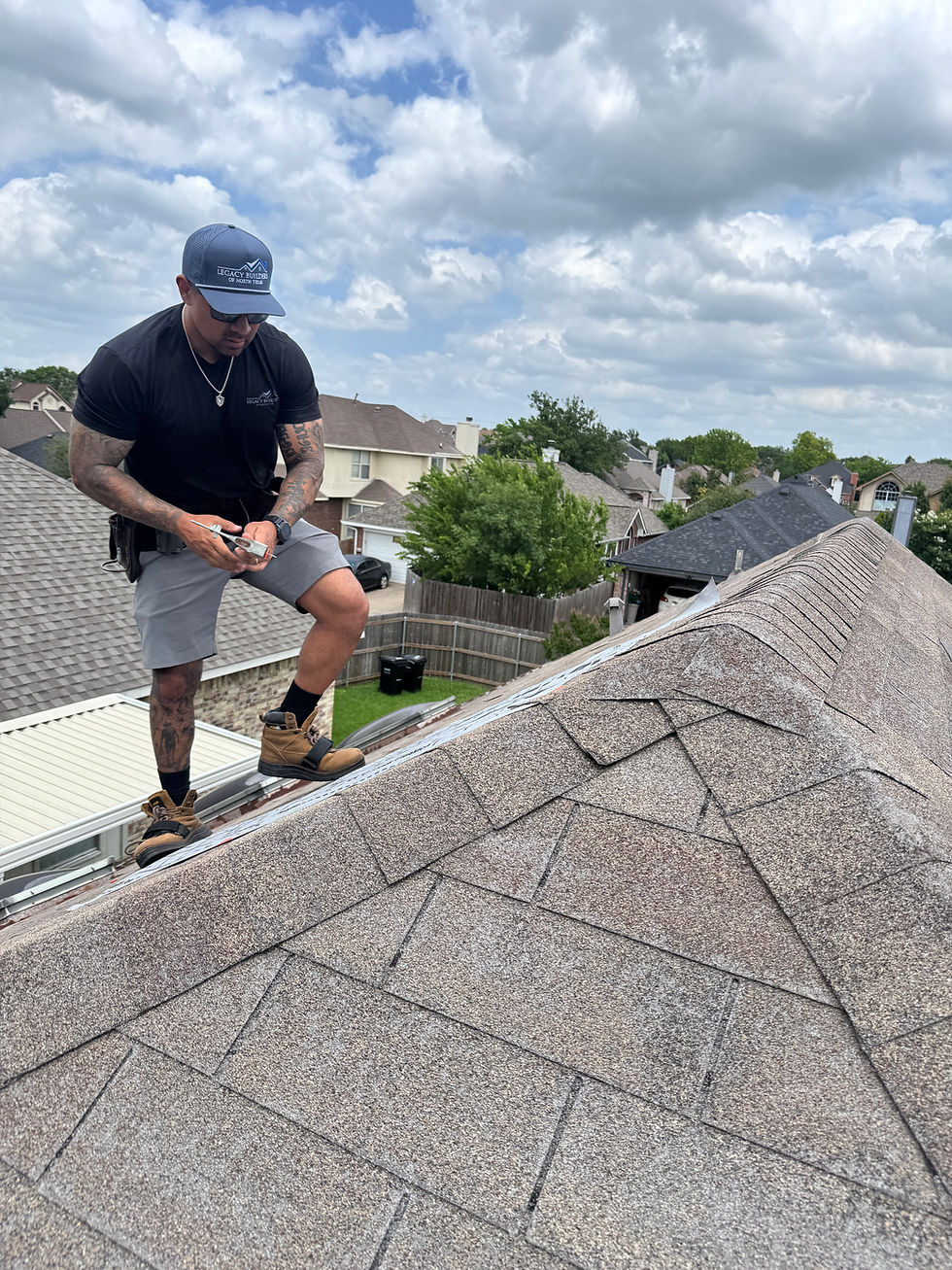
Your carrier sends an adjuster to inspect. Have your contractor there. The adjuster works for the insurance company; your contractor works for you. When both are on the roof together, damage gets documented completely the first time — this single step prevents most disputes.
Step 4: The scope and first check
If approved, you'll receive a scope of loss (the carrier's line-item estimate) and often a first check for the ACV (actual cash value). If you have replacement cost coverage, the remaining "recoverable depreciation" is paid after the work is completed.
Step 5: Supplements
Carrier scopes routinely miss items — code-required components, flashing, ventilation, sometimes entire slopes. Your contractor submits documented supplements for missing items. This is normal, not adversarial.
Step 6: Build and final payment
Work gets completed, the contractor invoices the carrier, depreciation gets released, and you pay your deductible — by law, in full. Any contractor who "handles" your deductible is committing fraud with your name attached.
How long do you actually have?
Shorter than you'd think, and longer than most roofers tell you.
Your policy likely asks for prompt notice — and many North Texas policies reference one year. But Texas law gives you two years to bring most insurance claims, and a policy can't legally shorten your window to sue below two years. Late notice by itself usually isn't enough for a carrier to deny you; they generally have to show the delay actually hurt them.
Translation: if your roof caught hail 14 months ago and someone told you it's too late, get a second opinion before you accept that. The best time to document damage was the week it happened. The second-best time is today.
The Bottom Line
Get inspected before you file. Have your contractor at the adjuster meeting. Expect supplements — they're normal, not a fight. Pay your deductible in full, every time. And don't assume a claim is dead just because a year has passed.
Questions We Get Asked
Should I file a claim for a small amount of damage?
Not always. If the repair is close to your deductible, filing creates a claim record without a payout worth having. A good inspection tells you the number before you decide — that's the point of getting one first.
Will filing a claim raise my rates?
Weather-related claims are treated differently from at-fault claims, but carriers do consider claim history at renewal. It's a fair question to ask your agent directly before you file.
What if my claim gets denied?
Denials are not final. Many are reversed with better documentation, a reinspection, or an appraisal. If you were denied and nobody ever photographed your roof properly, you likely haven't had a real review yet.
Related Reading
Understanding RCV and ACV Roof Claims for Texas Homeowners — what the two checks mean and why the second one takes longer
How to Tell If Hail Damaged Your Roof in Denton County — why you can't see hail bruising from the ground
Insurance Claim Assistance — how we handle claims start to finish
Get a Documented Roof Report
We photograph every slope, measure it, and give you a written condition assessment — shingles, flashing, gutters, decking — plus how many years your roof likely has left. You keep the report whether you hire us or not.
Call or text (469) 491-9544 to schedule.
Martin Garcia III — Owner, Legacy Builders of North Texas
Martin is a working firefighter and the founder of Legacy Builders of North Texas, a family-run roofing and exterior contractor based in Pilot Point. He has walked North Texas homeowners through hundreds of storm claims and adjuster meetings, and personally inspects the majority of the roofs the company writes.
Built to Last. Rooted in Legacy.
Serving Pilot Point, Aubrey, Denton, Celina, Prosper, Little Elm, Carrollton and the greater North Texas area. Last reviewed: July 2026


Comments